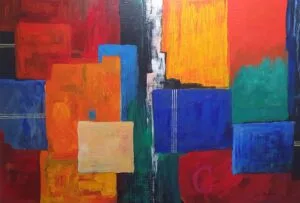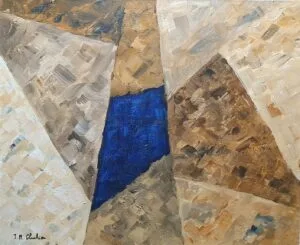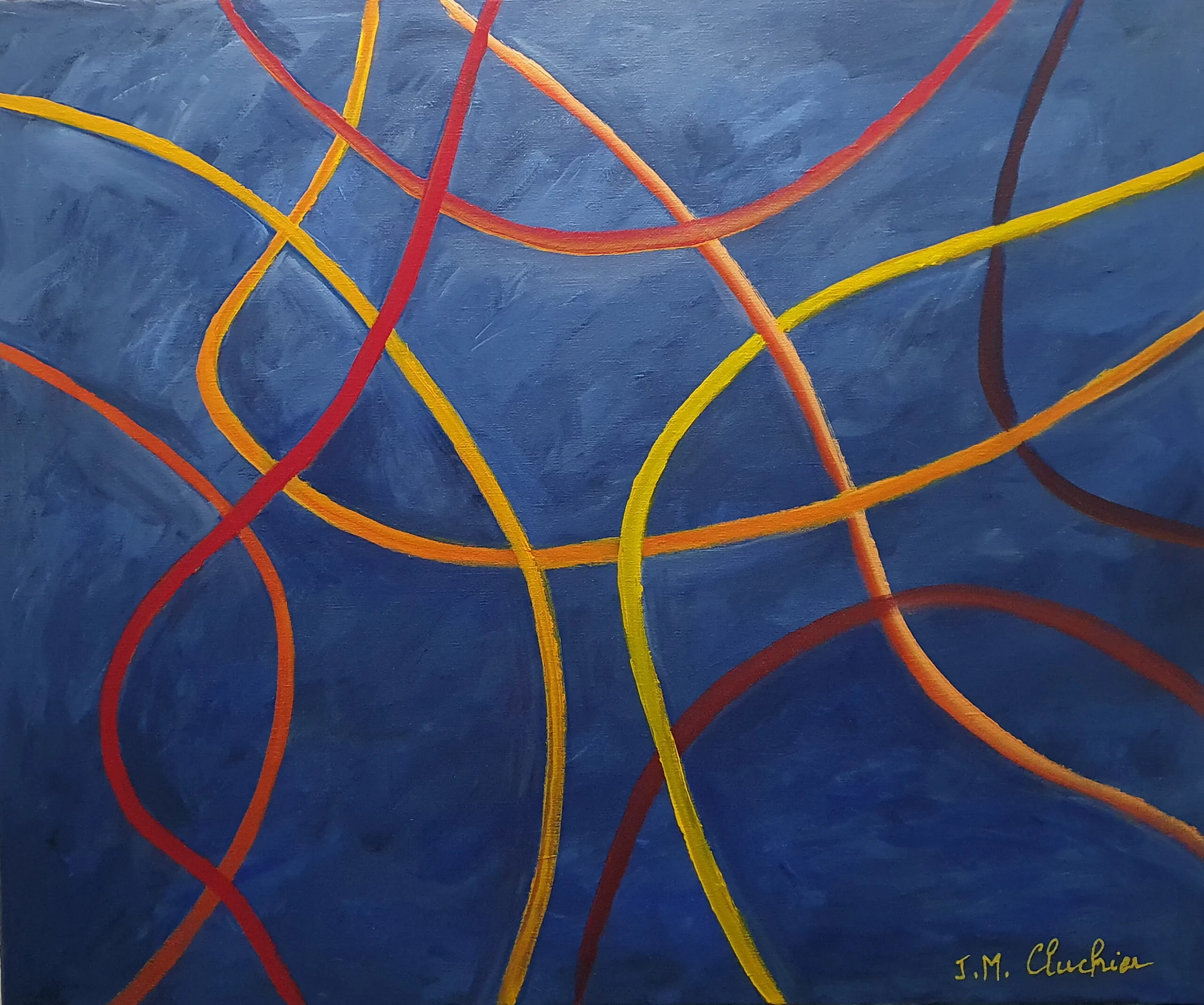
7 ways of acquiring an art work. A practical guide for art lovers and interior designers
You fell in love with a painting at an exhibition, spent hours scrolling through online galleries, or dreamed of bringing an original work of art into your home or design project — but you have no idea where to start. Buying a painting is much more than a transaction: it is an encounter, an emotional investment, sometimes a financial one. Yet the art market is vast, heterogeneous, and its mechanisms often remain opaque. This guide walks you through each purchasing channel, facts and figures in hand, so that your first — or next — acquisition is a genuine success.
The Art Market at a Glance
Let us start with a panoramic view. According to the Art Basel / UBS Global Art Market Report 2025 — the annual reference compiled by economist Clare McAndrew — the global art and antiques market reached $57.5 billion in 2024, a decline of 12% year on year. This pullback follows the post-Covid euphoria of 2021–2022: the market is recalibrating, but remains well above its 2019 pre-pandemic benchmark.
Two encouraging signals for first-time or budget-conscious buyers: transaction volume rose 3% (40.5 million purchase acts) and sales below $5,000 grew in value, confirming a democratisation trend. Small dealers with annual turnover below $250,000 even recorded a 17% increase in 2024.
On the digital side, online sales now account for $10.5 billion (18% of the total), still 76% above 2019 pre-pandemic levels, even if they fell 11% compared to 2023. The share of online sales generated by galleries’ and artists’ own websites has more than doubled since 2019 — a structural trend confirming that direct purchasing is gaining ground.
With this global context established, let us examine each of the seven available purchasing channels in turn.
Comparative Overview of Purchasing Channels
Overview of costs, price ranges and key benefits for each channel:
| Purchasing Channel | Commission / Fees | Typical Prices | Key Advantage |
|---|---|---|---|
| Artist’s website / studio | 0% | $100 – $5,000 | Lowest price, direct contact |
| Online gallery (Artmajeur…) | 30 – 50% | $200 – $10,000 | Wide choice, ease of use |
| Traditional gallery | 40 – 60% | $500 – $50,000 | Expertise, guidance |
| Regional / national art fair | Artist’s booth fees | $200 – $8,000 | Direct encounter |
| International fair (Art Basel…) | Gallery commission | $5,000 – several M$ | High-end market |
| Online auctions | 15 – 25% buyer’s premium | $100 – $50,000 | Accessibility, discovery prices |
| Traditional auctions | 20 – 28% buyer’s premium | $500 – several M$ | Transparent market pricing |
- Commissions above are calculated on the final sale price (buyer’s premium included for auctions).
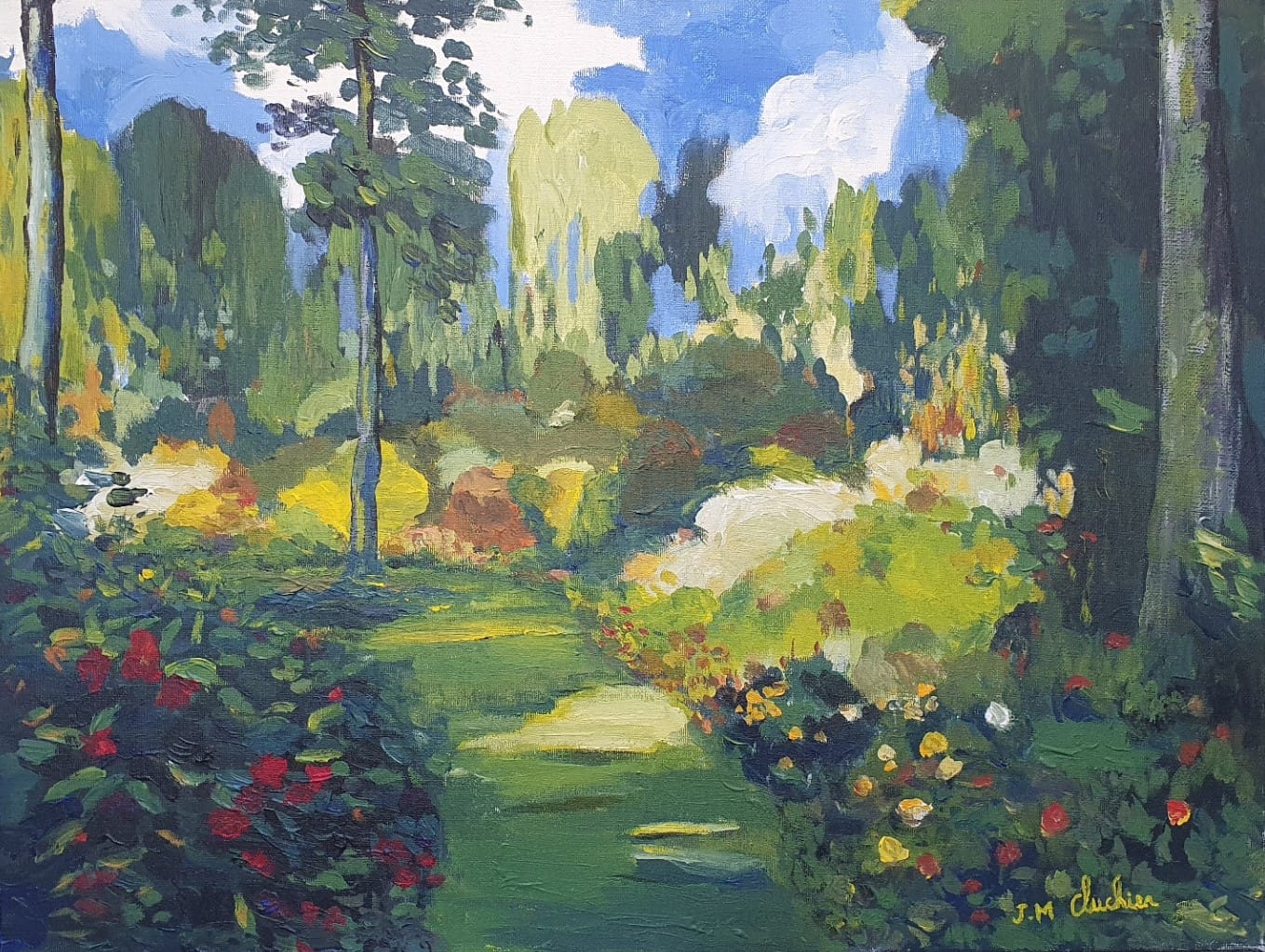
1. The Artist’s Website or Studio: The Royal Road
2. Online Multi-Artist Galleries
Platforms such as Artmajeur, Saatchi Art, Artsper, and Singulart have transformed access to contemporary art. They aggregate thousands of artists from around the world and offer a buying experience close to that of mainstream e-commerce: detailed listings, high-resolution photographs, customer reviews, secure payment, and guaranteed delivery.
These platforms charge a commission on each sale, typically between 30 and 50% of the sale price, covering their matchmaking, hosting, marketing, and logistics services. This commission is built into the listed price. In other words: for a painting listed at $1,000, the artist may receive between $500 and $700.
For the buyer, the advantage lies in convenience and security: returns guaranteed within 14 days on most platforms, responsive customer service, and professional packaging. It is an excellent entry point for a first purchase, with prices often starting from as little as $100–$200 for emerging artists and potentially reaching tens of thousands for more established names. A word of caution, however: the sheer abundance of choice can make selection difficult, and there is a risk of buying only what the algorithm promotes most prominently.
3. The Traditional Art Gallery
The city-centre gallery remains a cornerstone of the art market. According to the Art Basel / UBS 2025 report, dealer and gallery sales totalled $34.1 billion, representing nearly 60% of global market value. Despite a 6% decline in 2024, this segment remains dominant.
A reputable gallery does genuine work: artistic curation, promotion, exhibition organisation, and long-term artist representation. It provides invaluable mediation for the buyer: advice, expertise, and authenticity assurance. The commissions charged are, however, significant: they range from 40 to 60% of the sale price, and even higher for prestigious galleries. These fees cover the often expensive rent of a city-centre space, staff, communications, and exhibition costs.
For the decorator or collector seeking guidance, the gallery remains unrivalled: you benefit from an expert eye, professional hanging, and ongoing support. It is also the preferred channel for discovering carefully selected emerging artists. The downside: prices incorporate the gallery’s margin, often without full transparency on what the artist actually receives.
4. National and Regional Art Fairs
Art fairs and salons — from major national events to the many regional gatherings held throughout the year — are unmissable opportunities to discover a large number of artists and galleries in one place. Hundreds take place each year, from spring through to autumn.
For the buyer, an art fair is an ideal playground: direct encounters with artists or their representatives, the ability to compare works side by side, and a lively, festive atmosphere. Prices are generally accessible, typically ranging from $200 to $8,000 for paintings, with a diverse range of styles and formats.
However, beware of fairs that require artists to pay entry fees, as the quality can be very uneven. It is better to target salons with a selection committee or those organised by credible institutions. Also note that exhibition fees charged to artists (sometimes several hundred euros per weekend) can incentivise them to display higher prices to cover participation costs.
5. International Art Fairs
Art Basel (Basel, Miami Beach, Hong Kong, Paris), Frieze (London, New York), TEFAF (Maastricht)… These events are the global showcases for high-end contemporary and modern art. According to the Art Basel / UBS 2025 report, art fairs’ share of gallery sales rose to 31% in 2024, underscoring their strategic importance.
These fairs are reserved for galleries selected by application, and works on display typically start at several thousand dollars, rising to several million. The cost of participation (booth, travel, logistics) represents a significant investment for galleries, which is reflected in prices.
For the curious art lover, these fairs remain open to visitors and offer unparalleled immersion in the global market. For buyers with more modest budgets, certain dedicated sections for young galleries — such as Statements at Art Basel — offer more affordable works.
6. Online Auctions
The online auction market has exploded since the pandemic. Sotheby’s, Christie’s, and Phillips have all strengthened their digital platforms; specialist players such as Artsy, Catawiki, and Drouot Online offer sales accessible from home. Buyer’s premiums online are generally lower than in physical auction rooms, typically in the range of 15 to 25% of the hammer price.
This is a particularly relevant channel for buyers looking for discovery prices, works by young artists, or those who want to test the market. Online sales remain dominated by lots below $5,000, which aligns well with the needs of a beginning collector.
The main risk: you are buying without seeing the work in person. You must study the catalogue carefully, examine photographs from different angles, assess condition, and verify provenance. Delivery times can be long, and shipping and insurance costs are added on top of the hammer price.
7. Traditional Auction Houses
The major houses — Christie’s, Sotheby’s, Bonhams, Artcurial, and Drouot — represent the secondary art market in all its splendour. In 2024, public auction sales fell 25% to $19 billion according to the Art Basel / UBS 2025 report, following several years of post-pandemic euphoria. The segment of works above $10 million was particularly affected, while lots below $50,000 showed growth.
The fee structure is complex and has been subject to recent reforms. Sotheby’s revised its schedule in May 2024: buyer’s premium is now 20% up to a hammer price of $5 million, then 10% above that threshold. Christie’s applies 27% up to $1.5M, 22% between $1.5M and $8M, and 15% above. These fees, non-negotiable for the buyer, represent a significant share of the total price paid. Sellers are also charged fees, generally around 10% of the hammer price for the first $500,000, sometimes waived entirely for very high-value lots.
The advantage of auctions: transparent, market-determined pricing and access to works with certified provenance, often accompanied by rigorous expert appraisals. It is the only channel where the price is entirely set by the real-time confrontation of bids. For a discerning decorator or collector, regional auction houses can reveal wonderful surprises at very accessible prices.
Practical Tips Before Your First Purchase
- Define your total budget, all fees included (shipping, framing, insurance).
- Always request a certificate of authenticity, ideally signed by the artist themselves.
- For online purchases, verify the return policy: a minimum of 14 days on reputable platforms.
- Check the artist’s auction track record on Artprice.com or Invaluable before bidding.
- For a decorative purchase, ask for photographs in real conditions (natural light, shown to scale).
- Favour artists whose career you can follow: active website, gallery presence, social media.
- Do not hesitate to buy directly on the artist’s website — it is almost always the fairest price for both you and them.
Conclusion: Direct Purchasing, the Best Deal for Everyone
The art market is more accessible than ever. With 40.5 million transactions recorded worldwide in 2024 and sustained growth in the most affordable segments, contemporary art is gradually making its way into homes and design projects across a wide range of budgets.
Among all the options available, buying directly from the artist’s website or studio remains the most transparent, most economical, and most humanly rewarding approach. You pay the fair value of the work, with no intermediary; you know the person who created it; you obtain the strongest possible guarantee of authenticity. And you contribute directly to the livelihood of a living artist.
For interior designers seeking to offer their clients personalised, original spaces, this channel also opens the way to bespoke collaborations and long-term relationships with artists — a genuine competitive advantage.
Galleries, fairs, and auction houses each have their own merits — expertise, prestige, and events — and are well worth exploring depending on your goals. But for the art lover in search of the best possible experience at the best possible price, starting with the artist’s own website is, without question, the royal road.