Why does an artist turn to abstraction?
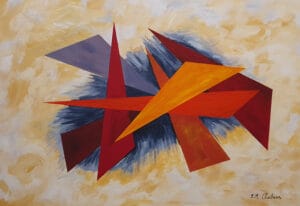
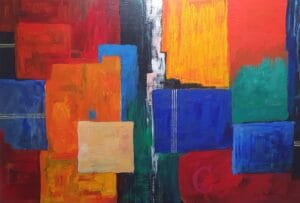
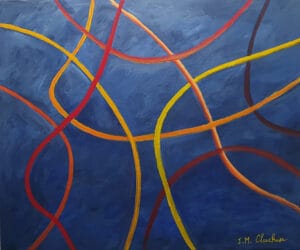
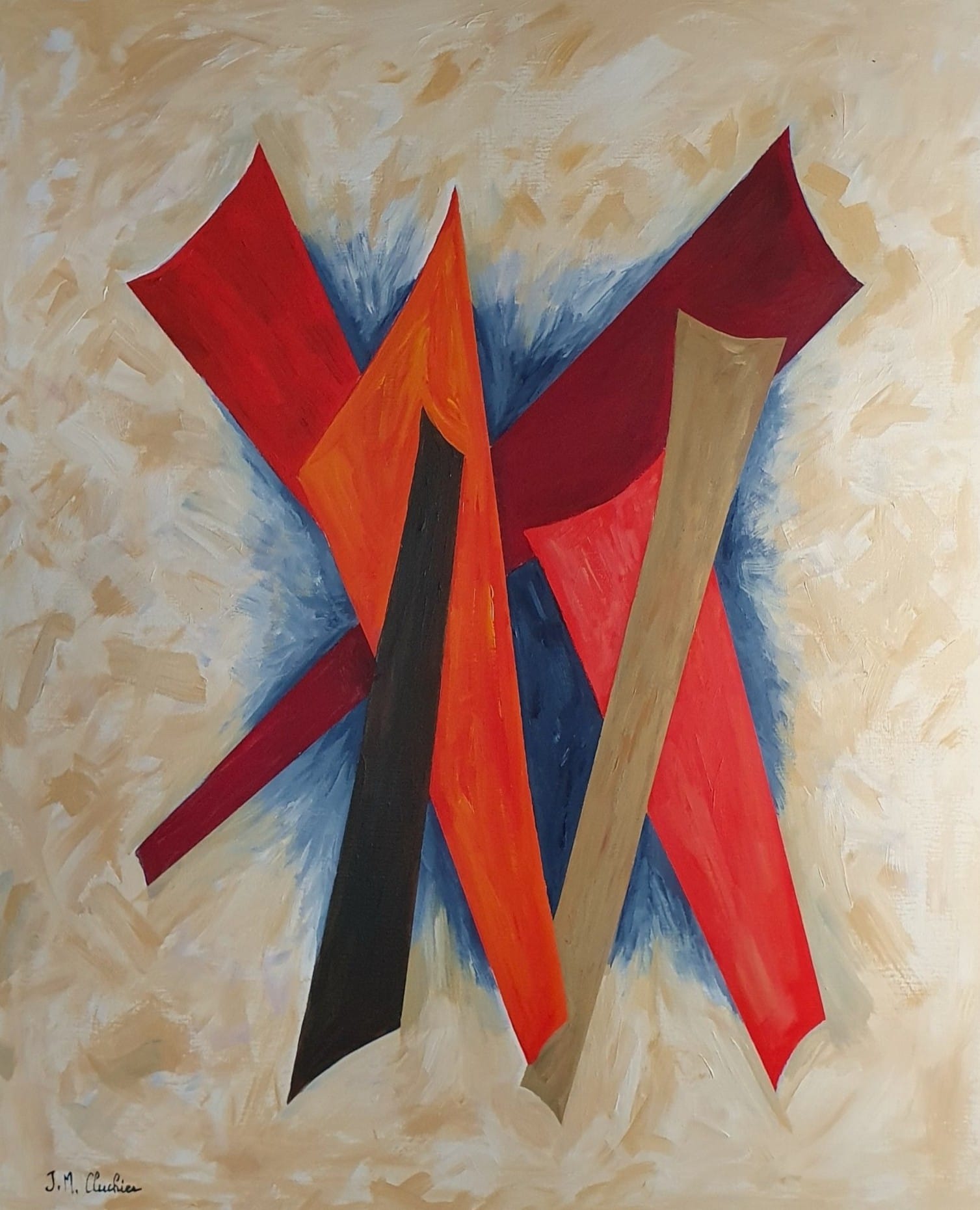
This series of abstract acrylic paintings, the result of a recent artistic exploration (all the works presented here date from 2024 and 2025), invites you on a journey into the heart of pictorial language liberated from figuration. Abstraction, far from being a simple rejection of reality, is a path of expression where form, color, and texture become the protagonists of an emotional narrative.
Since its first manifestations in the early 20th century, with pioneers such as Kandinsky and Mondrian, abstract art has constantly evolved, diversifying into a multitude of styles and approaches. It has allowed artists to explore the purity of visual sensations, to express states of mind, ideas, or concepts, without being anchored in the tangible world.
In these works, the artist explores the infinite possibilities of acrylic paint, working with layering and transparencies to create interior landscapes rich in dynamism and depth. Colors clash or blend, forms respond to or confront one another, in a visual dance where the viewer is invited to project their own emotions and interpretations.
Abstract art now occupies an essential place in the art world. It continues to stimulate creativity, question our perceptions, and foster dialogue between the artist and their audience. This series testifies to the vitality and relevance of this artistic approach, which remains a fertile ground for experimentation in the expression of human sensitivity.
Why does an artist turn to abstraction? Beyond the technical challenge this approach represents, the reasons are numerous and deeply personal. Abstraction offers freedom of expression without the constraints of faithfully representing reality. It allows the artist to break free from the anecdotal, from the reproduction of the visible, to focus on the essential: emotion, sensation, pure form, and color.
The abstract artist may be motivated by the desire to explore inner worlds, states of mind, or concepts that transcend tangible reality. Abstraction then becomes a universal language, capable of touching the viewer’s senses and imagination without the filter of recognizing an object or scene. It invites a personal experience, where each viewer can project their own interpretations and feelings.
Some artists may also be drawn to the formal dimension of abstraction: the interplay of lines, surfaces, textures, and colors, considered an end in itself. The quest for harmony, balance, or conversely, imbalance, may guide their work. It is an exploration of the power of visual language, where each element has its own significance and resonance.
Welcome to a universe where form fades to give way to essence. These abstract paintings do not seek to imitate reality, but to reinvent it, offering an experience where colors, textures, and movements dance freely on the canvas. Each work is an invitation to let go, to feel before understanding, to lose oneself in inner landscapes where imagination becomes the sole guide.
Here, abstraction is not an escape, but a plunge: from bold swathes of yellow or blue to swirls of melancholic gray, each painting pulses with a singular energy. These works explore the unknown with radical freedom, deconstructing lines, defying perspectives, and playing with delicately stretched materials. These creations oscillate between controlled chaos and unexpected harmony.
This is not a painting to be simply looked at: it is to be experienced. It challenges, questions, and sometimes disturbs, leaving each viewer to project their own emotions, memories, and silences onto it. Explore this series and discover works that don’t tell one story, but evoke a thousand. Whether you are an art lover or a curious seeker of sensations, this space is yours – a place where abstraction becomes a mirror of the soul.